



“Mistakes Were Made” is a periodic newsletter by Socratic CPG that dives deep into a case study related to the CPG industry. The newsletter is lengthy and intended to be read over the course of a month and saved for reference as needed by entrepreneurs and team leads. These thought-provoking case studies are not one-size-fits-all prescriptions. All case studies are based on real-world observations; however, I have taken the liberty to anonymize (to protect the innocent) and add a touch of drama (to engage the reader). I hope you find them thought-provoking and entertaining.
Executive Summary
Distributors play a crucial role in the Consumer Packaged Goods (CPG) industry as intermediaries between brands and retailers. They provide value by consolidating volume from numerous brands and items into centralized warehouses, known as distribution centers (DCs). This enables retailers to easily replenish their shelves with the right amount of each item and allows brands and manufacturers to efficiently ship large quantities of products to fewer destinations. In recent years, distributors have modernized their operations by developing professional sales teams and expanding their services beyond logistics and warehousing. They have also taken on the role of financial intermediaries, processing billions of dollars in payments between retailers and brands. Given the increasing reliance of retailers on distributors, it is crucial for brands to establish and maintain strong working relationships with their distributors.
In this case study, we will examine the sales impact of a change in the relationship with a key distributor at Brady's Bark, an organic chocolate snack company. Brady's Bark, with a 20-year history, established itself as the first brand to introduce an artisan-style chocolate bark snack made with organic fruits and nuts. This product was able to be produced on a large scale while maintaining consistent size and weight, which was important for national retailers. By developing a manufacturing process that replicated the appearance and texture of chocolate bark typically found in local candy or fudge shops, Brady's Bark successfully transcended the limitations of being a hyper-local product and built a national brand.
The Case
When Brady, the founder of Brady's Bark, first entered the retail industry, she initially targeted the natural channel. She recognized a gap in the market for a consistently sized, high-quality chocolate treat with an artisan touch. At the time, she was self-funding the business and dedicated her weekends to manufacturing the product and weekdays to selling it. With her empathetic and friendly selling approach, she quickly proved herself as a skilled salesperson. Brady understood that in order to scale her business, she needed to hire personnel for operations and manufacturing, allowing her to focus on sales. After all, the brand was her creation, and she was intimately familiar with every aspect of the product. The brand truly reflected her personality, and she embodied the essence of the brand.
As Brady's success continued to grow, she discovered that her largest distributor was assembling a sales team. This team would not only be incentivized to increase sales with retail partners, but also to increase the number of unique products (SKUs) that the distributor serviced. The distributor believed that having more SKUs purchased by a retailer would create a sense of "stickiness," making it difficult for the retailer to switch to a different distributor. (Note: In the United States, distribution is traditionally driven by retail. This means that if you want to sell your products to a specific retailer, you need to work with a designated distributor. In other locales, if you want to buy products from a specific brand, the retailer needs to purchase them from a designated distributor.)
Brady saw the creation of this sales team as a cost-effective way to expand her own sales efforts. She took advantage of this opportunity by attending regional sales team meetings and providing 15-minute "brand trainings." She armed the sales teams with samples, coupons, one-pagers, and special deals. Brady's friendly demeanor gained her many fans in the industry. Not only did the distributor's sales team begin promoting her product to their retail customers, but she also received numerous invitations for ride-alongs and category review meetings at natural chains across the country. Brady never missed a sales call and, within 5 years, achieved 90% distribution in the natural retail channel. This impressive accomplishment did not go unnoticed.
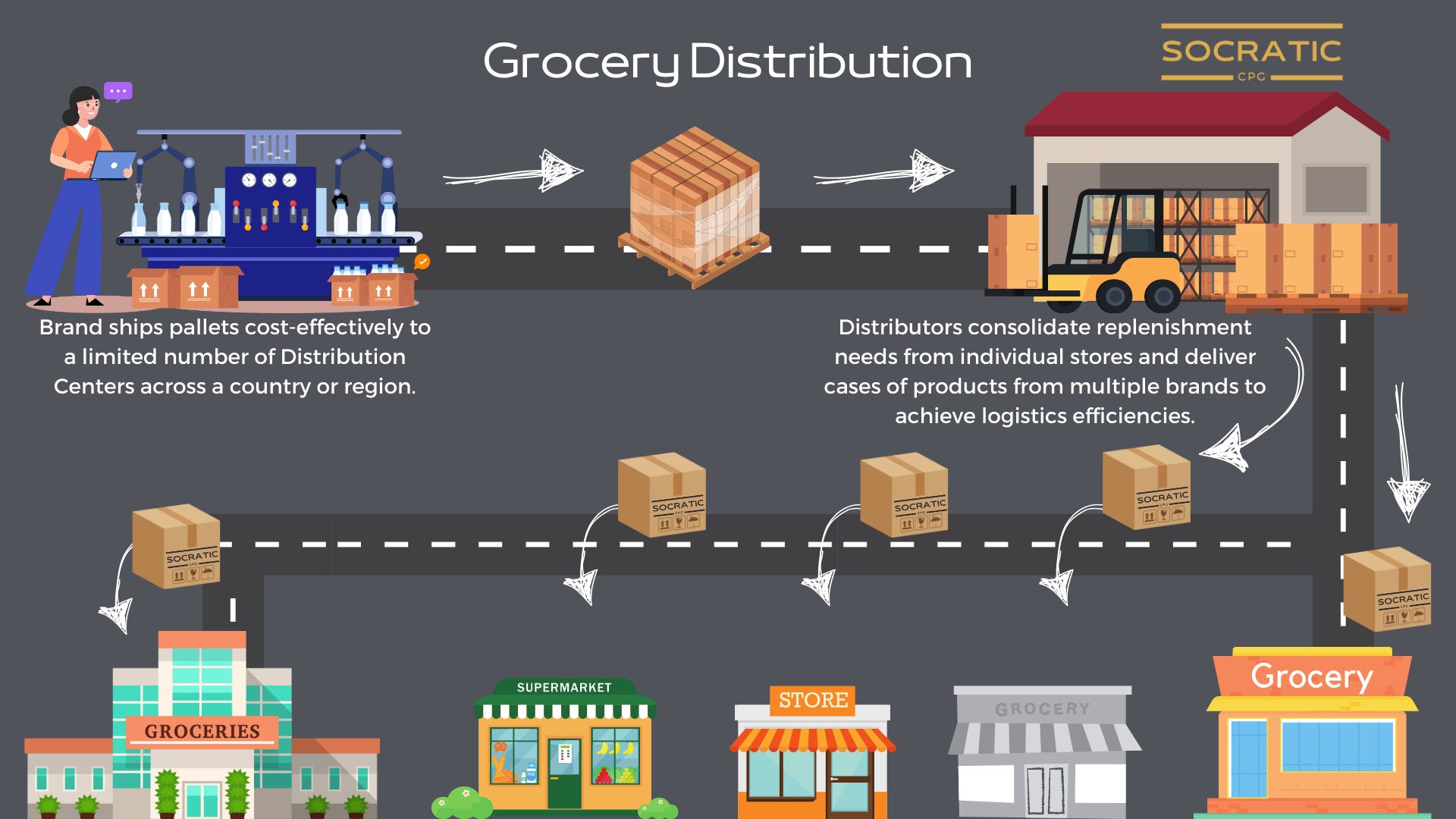
The natural channel has always been seen as the sandbox of the grocery industry. It is a nimble channel that fosters innovation and is quick to identify consumer trends' successes and failures well before they become mainstream. That is why traditional grocery stores like Kroger, Albertsons, and Publix, as well as Multi Outlet retailers like Walmart and Target, have always monitored the developments in the natural channel. They aim to leverage the successes of this channel and incorporate them into their own strategies as "safe bets."
Brady's 90% channel-wide distribution not only attracted the attention of super-regional and national retailers, but her consistent sales growth and ability to maintain product quality secured her success. As a result, Brady and her distributor sales team expanded their presence into non-natural stores nationwide, across all sales channels. After 15 years of establishing a natural brand, venturing beyond natural retail and entering the mainstream market, and with a strong e-commerce site, Brady's Bark achieved an annual gross revenue of $30 million. Brady herself became a shining example of success in the natural consumer packaged goods industry.
Throughout her growth, Brady carefully expanded her team in an asset-light approach while still leading her sales efforts. After a comprehensive business planning review led by her closest advisor, she realized that her success outside of the natural channel could be even greater if she allocated resources to expand her store count in those channels. With a profitable enough business, she was able to hire a qualified sales executive to take charge of this task. After an extensive search, she found a candidate who met all her requirements and assigned him the responsibility of expanding the store count in non-natural channels. After observing his performance for a year, Brady recognized his capability and promoted him to oversee sales across the entire company.
Due to Brady's longstanding relationship with her distributor and her decision to maintain natural channel sales during the first year of her new sales executive's tenure, she handled the typical growing pains with her distributor in her usual manner: professionally, pleasantly, and with a collaborative spirit. Internally, the employees at her distributor who worked with her always had confidence that Brady would address any problems that arose and that they would work together to find productive solutions. This exemplified the ideal relationship that every distributor desires with their brand partners.
To grant full autonomy to her recently promoted head of sales, Brady made a deliberate effort to refrain from interfering in the daily progress of the sales team. As the CEO, she shifted her oversight from receiving tactical weekly sales updates directly from her team to receiving monthly updates from her head of sales. This transition proved successful, as sales continued to grow, store counts in new channels met expectations, and Brady experienced a return to a more regular daily schedule that she had not enjoyed in over 16 years.
Just over a year into his new role as head of sales, Brady noticed that the updates she was receiving showed signs of slowing growth in new channels. Additionally, her sales in the natural channel consistently dipped below 1% year over year, resulting in losses. The head of sales started presenting updates with less quantitative analysis and more anecdotal notes on the industry trends, which seemed to justify the company's changing performance. Brady didn't see any cause for concern as everything seemed to align cohesively. They believed it was simply a change in market conditions that they were working on weathering, and were assured it would pass.
Brady observed several months of stagnant sales, but was not overly concerned as occasional plateaus are common, especially after achieving a significant market share in a category. Brady's primary focus was on maintaining the current trajectory and addressing any areas where her brand was underperforming. However, the results of category reviews conducted by retailers and distributors caught Brady off guard. She received a series of devastating results: Brady's Bark was losing shelf space in every major retailer in the market. While not as severe as complete discontinuation, the reduction in the brand's presence would have a significant negative impact on its performance and the company as a whole.
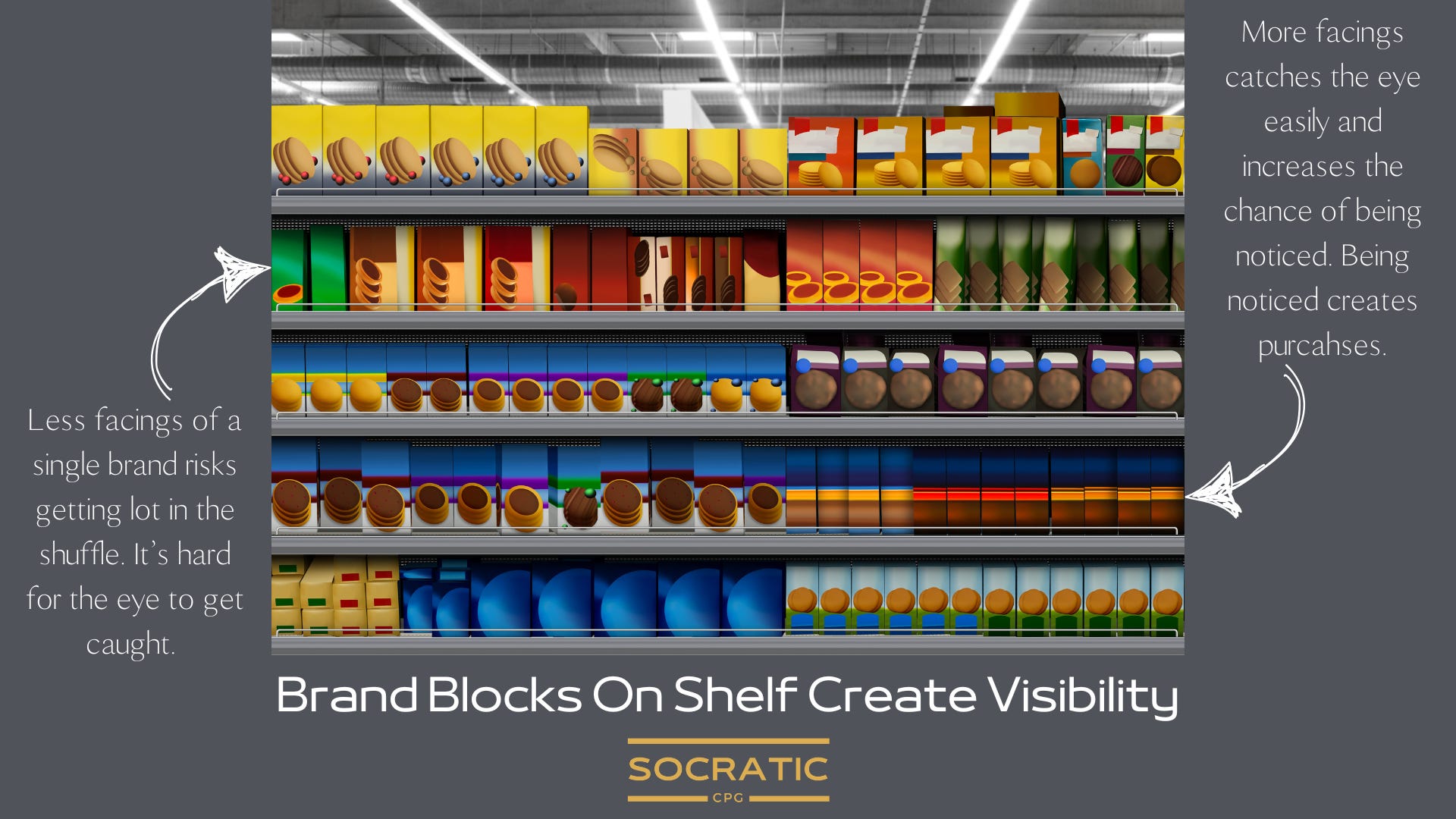
Brady immediately reached out to the category managers she knew to discuss the criteria they used to determine the need to scale back her presence. Disturbing feedback was received regarding a lack of transparency from her company and the increasing difficulty of working with Brady's Bark. Despite having built a successful category over the years, which now had enough players to sustain it, national retailers were not only considering the merits of a product, but also the ease of doing business with a brand partner when all other aspects were relatively equal. Ultimately, the reduction in the size of the Brady's Bark brand block on store shelves was a test conducted by retailers to gauge customer response to increased selection in the category. If the data shows positive results and Brady's Bark continues to be "difficult to work with," this reduction in shelf space could easily lead to the brand being completely removed from stores.
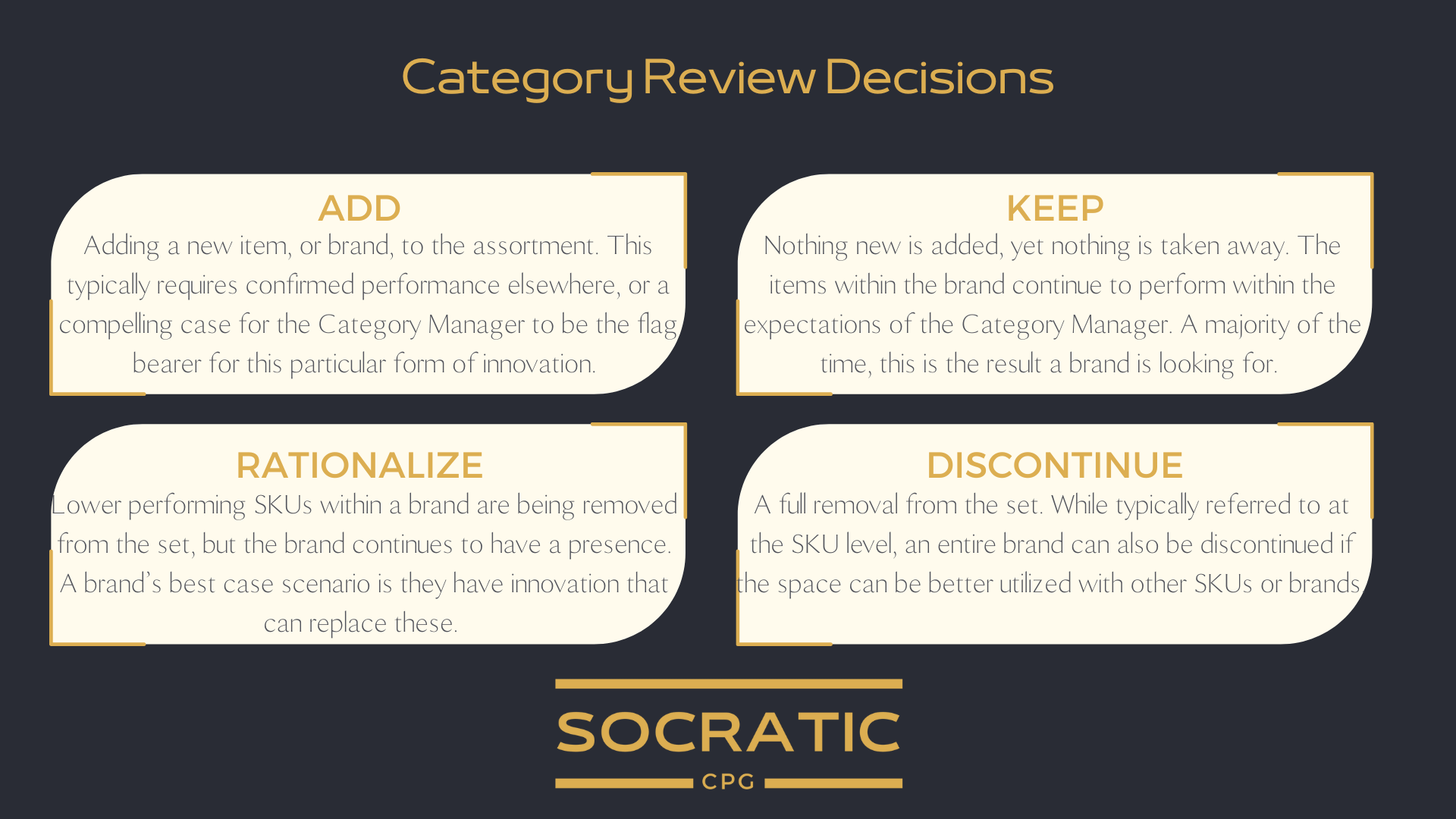
Aside from the anecdotal feedback from retailers, there seemed to be a more concerning common thread running through most of her conversations. Her distributor was sending its brand and item lists for the category to its retail partners before the category review periods, along with rankings and recommendations. However, Brady's Bark was no longer labeled as "Add/Keep" as it had been for years. Instead, the distributor recommended "Rationalize" for Brady's Bark. This recommendation was made company-wide during its own category review period, which the results stand for 12 months and is distributed to all retail partners as a value-added service. This dealt a devastating blow to Brady's Bark and its strategic plan for the future years.
Brady assigned her head of sales to coordinate a Top-To-Top meeting with the distributor. She wanted to have a discussion with the key decision makers present to understand the reasoning behind their decision. However, the distributor declined the request for a Top-To-Top and instead proposed an in-person meeting with the category manager, VP of category management (CM's boss), the buyer assigned to Brady's Bark, and VP of supply chain (Buyer's boss). Although they accepted this meeting, Brady knew that the distributor's refusal for a Top-To-Top, which had never happened before in their relationship, was not a positive sign. Despite not fully grasping the seriousness of the situation, she was prepared to actively engage and find a solution, as she had done in the past.
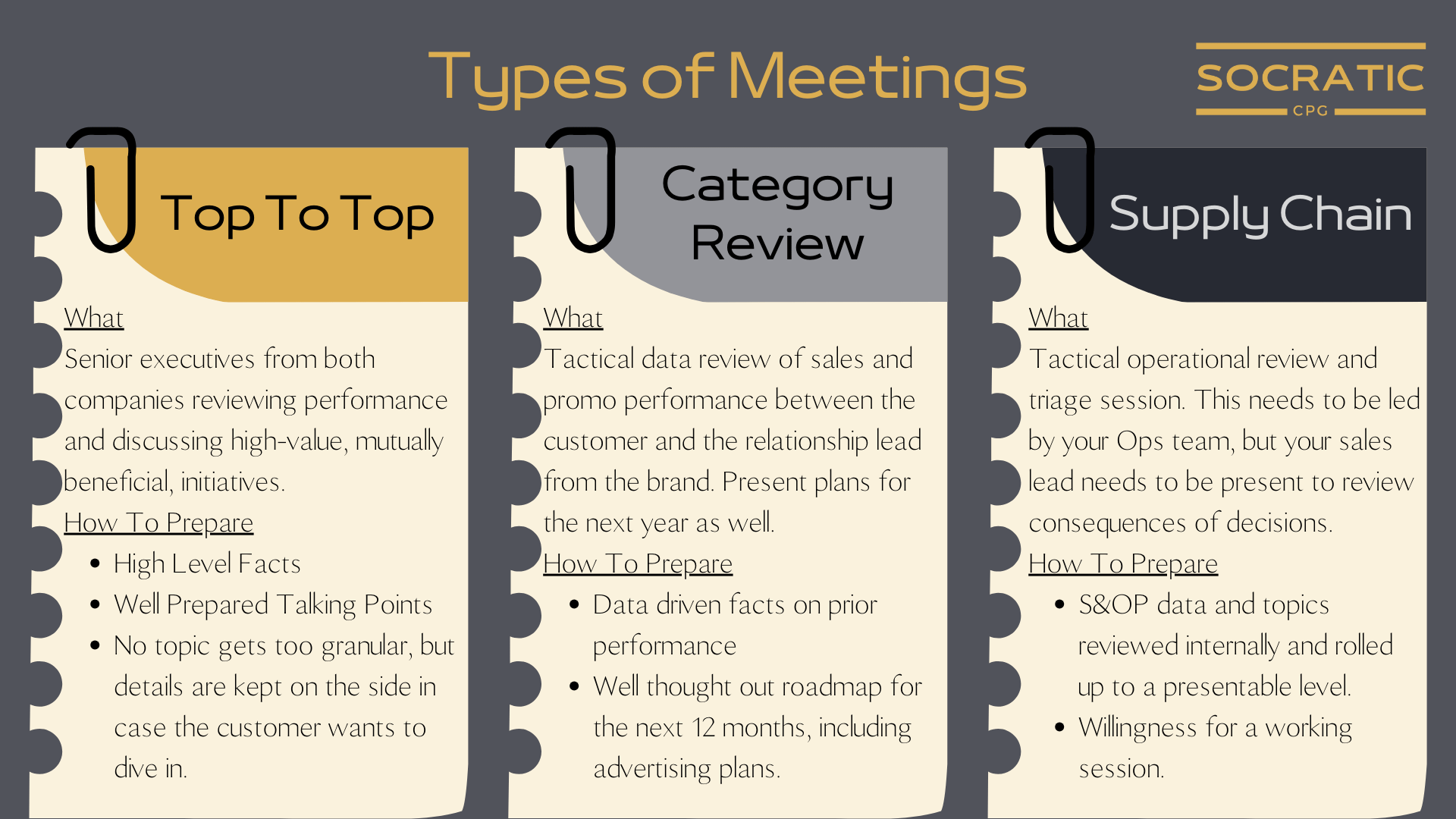
As our readers can already guess, this meeting did not go well for Brady's new head of sales. The distributor's team was clearly tired and frustrated with their working relationship after her departure from an active sales role, and they were not holding back on their honest feedback, with her present in the room. She quickly realized that her company had gone from being a collaborative, solution-based partner to the distributor, to becoming a confrontational, unaccountable vendor solely focused on results. There is a delicate balance between partnership and achieving results, and Brady's Bark, as a company, shifted heavily towards prioritizing results. Ironically, this imbalance had a negative impact on their overall performance.
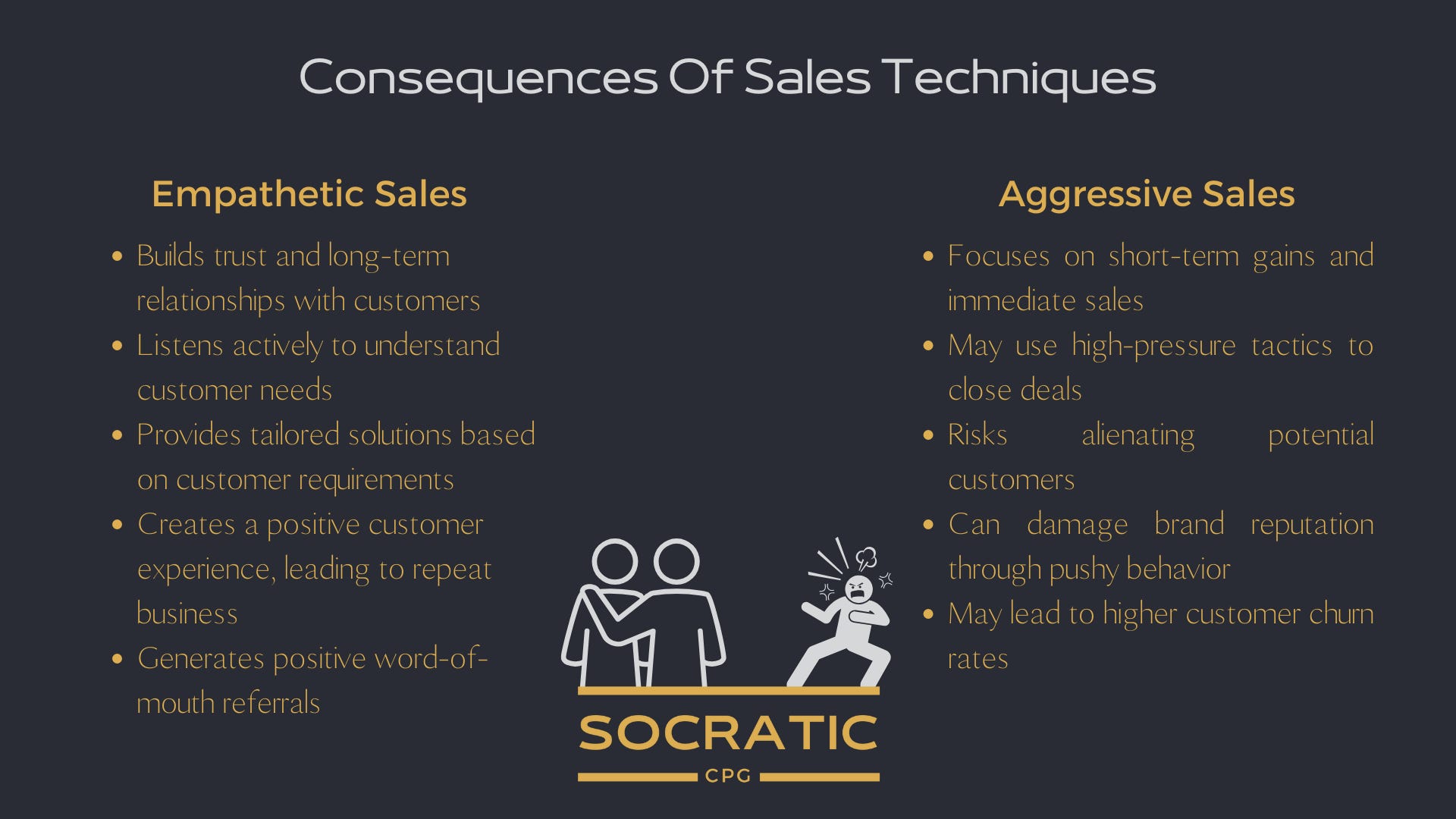
Due to the long lead times associated with category reviews, Brady's Bark experienced a significant loss of market share in the category. Competitors not only gained ground, but those with unique offerings began to thrive. Winning and maintaining shelf space is often likened to a battle, where efforts can lead to rapid growth or loss. The space that Brady's Bark lost not only slowed the company's momentum in the year following a challenging category review cycle, but predicting how the next few years will unfold is nearly impossible. Can a quick pivot help minimize losses? Will the entry of competitors on the shelf further accelerate losses, or will consumers try the new options and realize they still prefer Brady's Bark? Consumer preferences are unpredictable, making it difficult to forecast.
Analysis: Relationships Have Consequences That You Influence
The algebra of success is straightforward, but the benchmarks you use to measure it can change. This was demonstrated in real life at Brady's Bark. As an organization, they entered the next phase of their brand lifecycle, where success meant growth. This growth was measured by increased store count, velocity, and revenue. However, after making a pivot, they had to quickly redefine success. Their new goals were to minimize losses, repair relationships, and save the business.
In the consumer packaged goods (CPG) industry, it is common to view middlemen, brokers, and distributors as intimidating figures. They handle the intricate aspects of the business that would otherwise make it challenging for new players to enter the CPG market. However, this should not give them a free pass for their historically tedious and sometimes outdated policies and processes, which can lead to errors and complications. Nevertheless, it is of utmost importance for brands to approach them as partners rather than adversaries.
The CPG industry may be small, but it holds a significant share of the population's daily spending power. It is a close-knit community where reputations matter. Therefore, it is essential to maintain strong relationships and approach everyone and every issue with respect. By orienting yourself and your team around partnerships, you will be surprised by how many people are willing to offer assistance without expecting anything in return.
Resources
Feel free to use these resources in your own decks and presentations.


Socratic CPG
Socratic CPG is a boutique consulting firm that specializes in supporting the success of Better For You focused consumer brands. Our areas of expertise include startup coaching, profitable scaling, asset light operations, and distribution strategies. For more information, please visit our website at www.socraticcpg.com or reach out to John Henry directly at JohnHenry@SocraticCPG.com.